Direct selling
Direct Selling Social Media Compliance: A Checklist for Every Post
Most compliance trouble for distributors starts with one casual post, and this checklist helps you catch it before you hit share.
Most distributors who end up in a compliance conversation never set out to break a rule. They were excited. A product worked for them, a team call went well, a trip came through, and they grabbed their phone and posted. A few hours later someone from the company's compliance team sent a polite message asking them to take it down.
That is the normal way this goes. Social media rewards speed and emotion, and compliance asks you to slow down for about thirty seconds. This article is about those thirty seconds. It covers the kinds of posts that cause trouble, why they cause trouble, and a simple checklist you can run before you share anything about your business.
One honest note first: this is general guidance, not legal advice. Your company's policies may be stricter than anything here, and when they are, follow them.
Why social posts get distributors in trouble
When you post about your business, regulators and your company treat you as a seller making a marketing claim, not as a friend sharing an opinion. That is the shift most new distributors miss. Your personal account becomes an ad the moment it talks about products you sell or the opportunity you are part of.
The Federal Trade Commission has been direct about this. Its business guidance on multi-level marketing explains that companies can be responsible for what their distributors say, which is why most companies now watch social media closely and have written policies about it.
There are three areas where posts usually go wrong:
- Claims about money or lifestyle tied to the business
- Claims about what a product does, especially for health
- Not making it clear that you sell the thing you are praising
The trouble is rarely one wild post. It is usually a pattern of small, casual ones that add up to a picture your company never approved.
Income and lifestyle claims
This is the area that worries companies most, and for good reason. The FTC treats any statement about earnings, direct or implied, as an earnings claim. That includes things you might not think of as claims at all.
Posts that commonly create problems include:
- Screenshots of commission statements or bank deposits
- Captions saying the business let you leave a job or pay off debt
- Photos of cars, vacations, or homes framed as rewards from the business
- Phrases suggesting anyone can get similar results with enough effort
- Recruiting posts that focus on money instead of the product and the work
The lifestyle category catches people off guard. A beach photo by itself is fine. A beach photo with a caption tying it to your business, or tagged with your company, starts to suggest what joining could mean for someone else. The FTC's MLM guidance specifically calls out lifestyle images as a way to make an implied earnings claim.
Here is the grounded truth that keeps you safe: building a team is slow. Most people who join a direct selling company spend months learning, sharing, and following up before anything feels steady, and many decide it is not for them. Posts that skip all of that, and show only a highlight, give a false picture even when every photo is real.
So talk about the work instead. What did your week look like? How many conversations did you have? What did you learn on a training call? What do customers like about the product? That kind of post is honest, and it tends to attract people who are ready for real effort. If you want more detail on this one topic, our article on FTC income claims in direct selling goes deeper into what to avoid saying.
Product and health claims
The second big risk is overpromising what a product does. This matters most with supplements, weight management products, skin care, and essential oils, but it applies to anything.
The rule of thumb is simple. If you claim a product treats, cures, or prevents a disease or condition, you are making a claim that needs serious scientific support, and that support has to come from the company, not from your personal experience. The FTC's Health Products Compliance Guidance explains that health claims need competent and reliable scientific evidence behind them. Your story about how you felt is not that evidence.
Posts that tend to cross the line:
- Saying a product helped with anxiety, arthritis, diabetes, acne, or any named condition
- Suggesting someone can stop or reduce a medication
- Before and after photos that suggest results most people will not get
- Sharing a customer's message about a medical result
Safer ground looks like this:
- How you use the product in your routine
- Taste, texture, scent, convenience, or packaging
- Claims copied word for word from your company's approved materials
- Pointing people to the official product page for details
A useful habit: if you would not say it to a pharmacist with a straight face, do not post it. And if you are unsure, use your company's approved language. They paid lawyers to write it so you would not have to guess.
Disclosing your relationship with the company
People have a right to know when the person recommending something benefits from the sale. That is the core idea behind the FTC's Endorsement Guides, and it applies to distributors just as it applies to influencers.
The FTC's plain language guide, Disclosures 101 for Social Media Influencers, lays out the basics. A disclosure should be:
- Clear. Simple words like "I'm an independent distributor for this company" or "I earn commission if you buy through my link." Vague tags like "#sp" or "#collab" may not be understood.
- Easy to see. Put it near the start of your caption, before the "more" cutoff. Do not bury it in a block of hashtags or only in your bio.
- In the format you are using. For video or live streams, say it out loud, ideally more than once, and show it on screen too.
- On every post. Each post can be seen on its own, so each one needs its own disclosure.
The FTC also keeps a longer FAQ on the Endorsement Guides that answers specific questions, including how disclosures work on different platforms. It is worth skimming once.
Disclosure is not just a legal box. It builds trust. Most of your followers already know you sell something. Saying so plainly makes you look more honest, not less.
A pre-post checklist
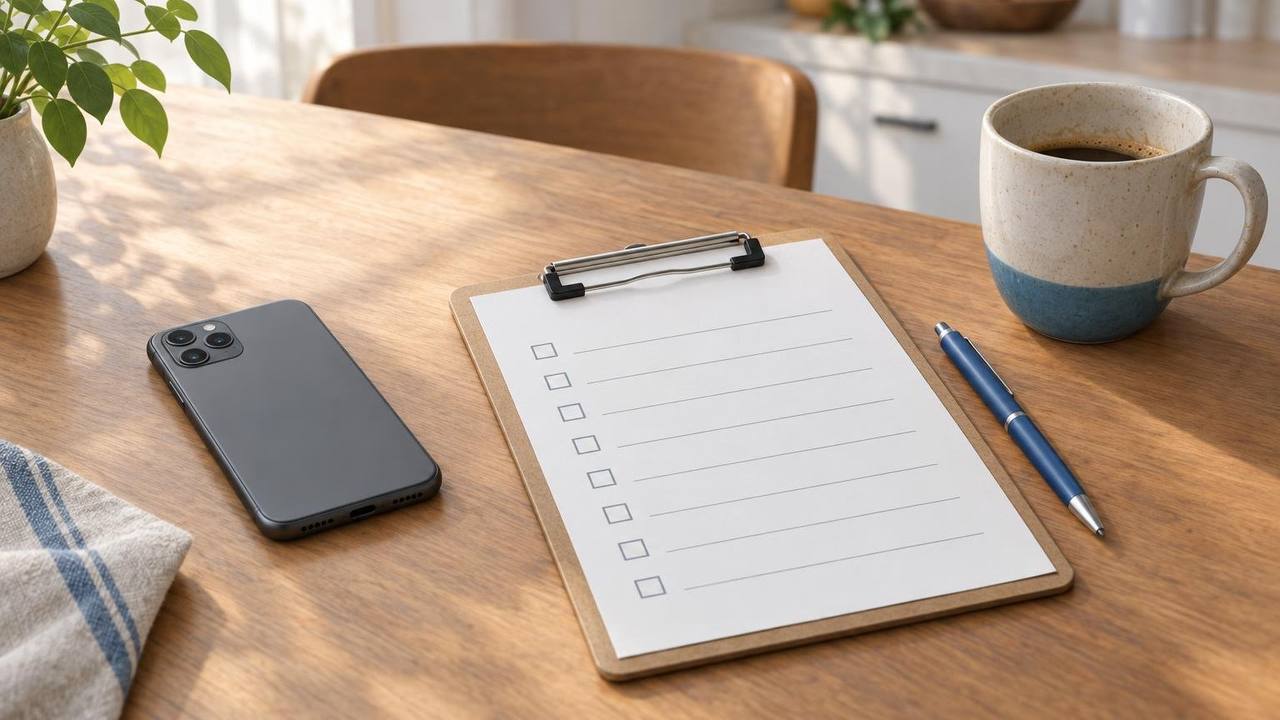
Here is the checklist itself. Save it in your notes app, print it for your desk, or share it with your team. Run through it before anything about your business goes live.
- Does this post mention money, a job, debt, or a purchase I made because of the business? If yes, rewrite or skip it.
- Does the photo or video suggest a lifestyle connected to the business? Cars, trips, and homes tied to your company need extra caution. When in doubt, leave the business out of the caption.
- Am I saying the product treats, cures, or prevents anything? If yes, remove it.
- Are my product claims taken from approved company materials? If not, check them against those materials.
- Is my relationship with the company clear in the first line or two? Not just in my bio.
- If this is a video, did I say it out loud?
- Am I sharing a customer's words? Their claims become my claims, so they need to pass this same list.
- Am I using the company's trademarks or logos the way my policy allows?
- Would I be comfortable if my compliance team read this? If you hesitate, that is your answer.
The first few days with this list feel slow. After a couple of weeks it takes seconds. It also helps new team members, because a written checklist is easier to copy than a vague warning to be careful. If you are bringing someone new onto your team, putting this into their first month makes the habit stick early, the same way you would teach them follow-up or product basics.
This list also applies beyond feed posts. Stories, comments, direct messages, group chats, and lead magnets all count. A freebie or quiz that promises results needs the same review as a caption.
What to do if you posted something you should not have
Everyone who posts a lot will slip at some point. What matters is how you respond.
- Take it down or edit it quickly. Do not wait to see if anyone notices. If the platform allows editing, you can fix the caption, but deleting is often cleaner when the problem is the image.
- Check where it spread. Did it go to stories, groups, or other platforms? Did teammates reshare it? Ask them to remove their copies too.
- Tell your upline or your company's compliance team. This feels uncomfortable, but it is almost always better to raise it yourself. Most companies would rather help you fix a mistake than find it later.
- Do not argue in the comments. If someone points out the problem publicly, thank them, fix it, and move on.
- Look for the pattern. One bad post is a slip. Several similar ones mean your habits need a reset. Go back through recent posts and clean up anything that would fail the checklist.
- Update your templates. If you reuse captions or graphics, fix the source so the mistake does not repeat.
The Direct Selling Association's Code of Ethics is a good reminder that member companies commit to truthful marketing. Your company's compliance team is there to help you stay inside that, not just to catch you.
Common questions
Do I need a disclosure if I only reshare my company's own posts?
Yes, in most cases. When you share something to your followers and you can benefit from sales, your audience should know about that connection. Add a short, clear line in your own caption, such as "I'm an independent distributor for this brand," rather than assuming the original post covers it.
Is putting #ad at the end of my caption enough?
A hashtag can work, but placement matters. The FTC advises that disclosures be easy to see, so put them near the start of the caption where they show before the "more" cutoff, and say it out loud in videos. A disclosure buried in a pile of hashtags or only in your bio is easy to miss.
Can I share a customer's review of a product I sell?
You can share honest reviews, but once you post them, the claims in them become your claims. If a customer says a product cured or treated a condition, do not share it. Stick to reviews about taste, texture, convenience, or how they like using the product, and follow your company's testimonial policy.
The bottom line
Compliant posting is not about being boring. It is about being honest about what the product does, honest about how slow and steady this work really is, and honest that you sell what you share. Those three things protect you, protect your company, and protect the people reading your posts.
Keep the checklist close, use approved language, disclose every time, and fix mistakes fast when they happen. Over time, posts about real work and real customers tend to build the kind of trust that lasts longer than any highlight reel.
If it helps to keep approved captions, disclosure templates, and the leads that come from your posts in one place, Prala brings content tools, forms, and follow-up together for direct sellers and small teams. You can look over the plans on the pricing page, or start an account when you are ready.